Overview: Renewed Hostilities in the Strait of Hormuz
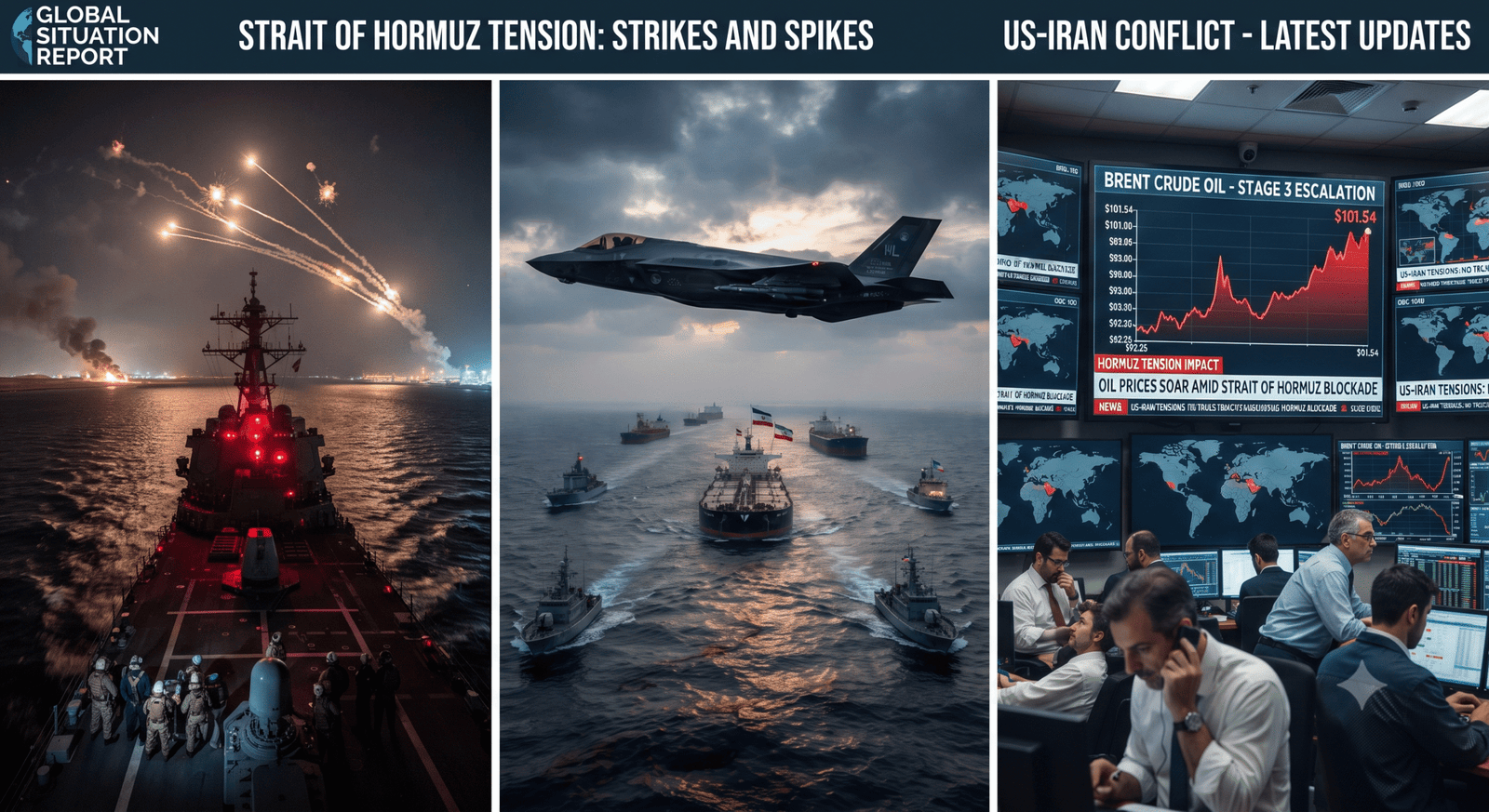
The fragile truce that temporarily paused the conflict earlier this year has officially collapsed. Following a breakdown in compliance over maritime corridors in the Strait of Hormuz, the U.S. military has completed its 13th consecutive night of airstrikes against Iranian infrastructure..The Hindu
The renewed conflict—stemming from a push by Iran to enforce pre-approved routing and collect passage fees—has triggered a severe regional flare-up, bringing critical shipping lanes back to the center of geopolitical tension.Britannica
Key Developments & Military Actions
- CENTCOM Campaign: U.S. Central Command airstrikes continue to focus on disabling Iranian drone sites, command centers, coastal defense systems, and maritime infrastructure used to threaten commercial vessels. President Donald Trump warned that the U.S. will retaliate against vital infrastructure for every attack on shipping.
- Regional Retaliation: Iran and its aligned groups have pushed back with drone and missile salvos targeting regional hubs. Recent incidents include air defense activations and explosions in Bahrain (with Iranian state media claiming strikes on a U.S. military base and a local data center) as well as intercepted threats near Jordan and Kuwait.
- Red Sea Spillovers: Yemen’s Houthi movement has intensified maritime pressures by declaring an embargo and targeting commercial tankers in the Red Sea, risking a wider multi-front escalation.Al Jazeera+ 1
Global & Economic Fallout
- Spike in Oil Prices: Ongoing insecurity and threats to shipping through the Strait of Hormuz have pushed global Brent crude oil benchmarks above $100 a barrel, creating fresh inflationary pressures for international markets.
- Stalled Diplomacy: Efforts by international mediators to broker a renewed cease-fire have stalled. President Trump stated that Iran is “not ready” for an equitable deal, announcing plans to hold frozen Iranian assets accountable to cover commercial shipping damages. Meanwhile, the European Union’s oil coordination group maintains that domestic reserves and alternative streams are currently covering European energy demands without immediate supply shortages.CBS News